A Fixed Menu or a Short Rotating One?
A fixed menu or short rotating offer can balance reliable choice with manageable change, helping a place-based venture stay current without overloading daily work.
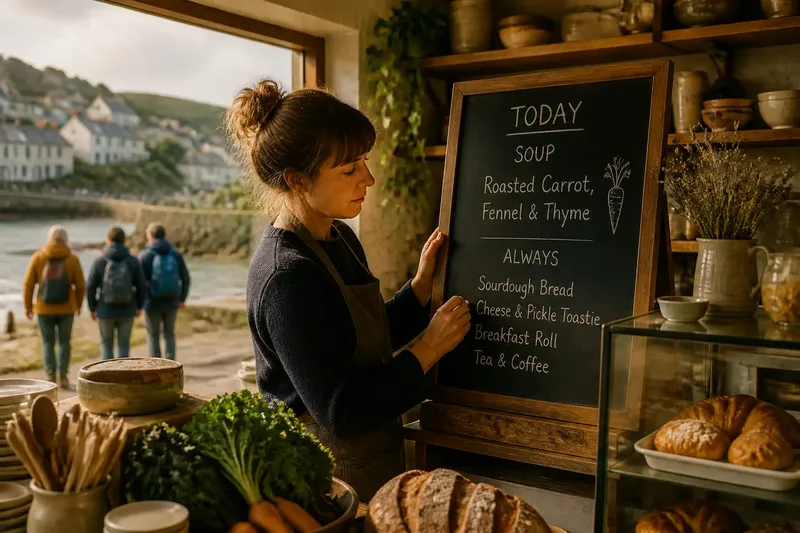
The common mistake with a fixed menu or short rotating offer is changing too much simply because a new idea feels exciting. Customers then have to relearn what is available, while the owner must update signs, buy unfamiliar stock and explain each change. The cost is not just extra work: an offer can become harder to recognise and deliver consistently.
A better choice starts with the amount of change your venture can absorb without disrupting its dependable parts. A fixed offer makes the same promise over time. A short rotating offer keeps a stable core and changes a limited part. Neither is automatically better; the right fit depends on what customers return for and what the place can supply and support.
What does each offer ask of you?
A fixed offer is a defined set of products or services that stays in place. A small bakery might keep its everyday loaves, pastries and drinks consistent, with the same names and ingredients on its board. Customers can make a familiar choice, and staff can learn the routine. The owner can also plan purchasing and preparation around a known range.
A rotating offer changes some items on a schedule or in response to availability. A farm shop café might keep soup, bread and a few staples while changing a seasonal dish when local produce shifts. The changing item gives regular customers a reason to look again, but someone must decide what replaces it, arrange ingredients, revise the menu and brief anyone serving it.
Rotation need not mean constant novelty. It can be one changing item, a small group that moves with the season, or a special offered only when a particular ingredient is available. The important distinction is between a stable promise and a promise that includes planned change.
How do consistency and choice differ?
Consistency is useful when visitors arrive with a clear expectation: a familiar packed lunch before a coastal walk, a dependable repair service near a market, or a regular set of workshops at a community venue. If the main offer changes often, customers may hesitate because they cannot tell whether the thing they came for is still there.
Choice is not simply the number of options. A long list can make decisions slower and increase the chance of unused stock or confusing explanations. A compact rotating offer can provide freshness without asking a small team to maintain a large catalogue. Conversely, a fixed offer with a few well-chosen options may already provide enough choice for the people who visit.
Consider the rhythm of local visits. A destination with many one-off visitors may benefit from making its main offer immediately legible: a clear sign, familiar names and a reliable reason to buy. A place with a strong base of repeat customers may have more room to introduce a changing feature. These are tendencies, not rules; the question is what returning customers actually ask for and what first-time visitors need to understand.
What does keeping an offer current involve?
Each change has a small chain of tasks. An item may need a new supplier, a revised description, different storage, a price decision, a staff briefing and a way to show that it is no longer available. In a small venture, those tasks compete with serving customers and keeping the regular offer in good order.
Before adding rotation, name the person who will make each decision. Decide what signals a change, who confirms supply, how customers will hear about it and what happens if an ingredient or service component is unavailable. A chalkboard can be quick to update, but only if someone remembers to change it. A printed card is tidy, but repeated reprinting may be a nuisance.
For a service venture, the same principle applies without a menu. A guide might keep a core walking route and add one seasonal option; a maker might keep a standard range and offer a limited local material when it is available. The rotating element should be clear enough to explain and small enough to pause without making the whole business feel unfinished.
Not worth the effort: changing names, packaging and displays merely to make a familiar offer look new. If customers cannot see a useful difference, the extra administration is unlikely to earn its keep.
How can you choose the right amount of change?
Start with a simple inventory of what already sells or gets requested, what is difficult to replenish, and which tasks repeatedly interrupt service. Then choose the smallest rotation that answers a real need. Keep the stable parts visible, and make the changing part easy to identify as temporary or seasonal.
Say a small harbour café serves walkers and local workers. Its owner wants to use vegetables from nearby growers, but deliveries vary. The café could keep its familiar breakfast and lunch staples, then rotate one soup when suitable produce arrives. The board would name the soup and its main ingredients; if supply fails, staff would offer the regular alternative rather than improvise a new dish. The expected observable result is that customers can still order the dependable staples while the changing item reflects what is available.
That approach does not require a permanent commitment to rotation. The owner can review whether customers notice the changing item, whether staff can explain it, and whether sourcing it disrupts other work. If the change creates more confusion than value, the menu can return to a fixed set without rebuilding the entire offer.
Which questions help settle the decision?
How often should a rotating offer change?
Choose a rhythm that matches the venture’s supply and workload, not an arbitrary calendar. Change only when the replacement is ready to explain, source and deliver reliably.
Can a fixed offer still feel connected to its place?
Yes. A steady offer can reflect local tastes, ingredients, skills or visitor routines without changing its contents frequently. Place-based character comes through in what the venture chooses to provide as well as in seasonal variation.
What if customers ask for more choice?
Ask what they could not find and whether that request recurs. If several customers need the same thing, consider adding one clear option; avoid expanding the whole range to answer a single passing suggestion.
What if an advertised rotating item becomes unavailable?
State the change plainly and point to the closest available alternative. Keep the core offer easy to understand so a missing special does not leave visitors unsure what they can buy or book.
How do you keep the offer understandable?
Use stable names for permanent items and mark changing ones clearly with words such as “seasonal” or “today”. Put the dependable offer where customers see it first. Keep descriptions brief and say what is included; if ingredients, service terms or local rules affect what you can promise, follow the relevant label, supplier instructions or local requirements.
Review the offer through observable questions rather than a complicated tracking system: do visitors find the choice clear, can staff describe it without checking several notes, and does the changing part fit the work already being done? A short conversation at the counter and a note of recurring requests may be enough to spot a pattern.
For a fixed menu or short rotating offer, the useful test is how much change the venture can comfortably carry while keeping its central promise clear. Start with a dependable core, make any changing element modest and visible, and adjust only when customer needs or local supply give you a practical reason. That leaves room for the character of a place to show without turning every new idea into another obligation.