From Travelling Stall to Permanent Shopfront
From travelling stall to permanent shopfront: learn how a fixed address can build visitor trust, deepen local ties and change the work of selling.
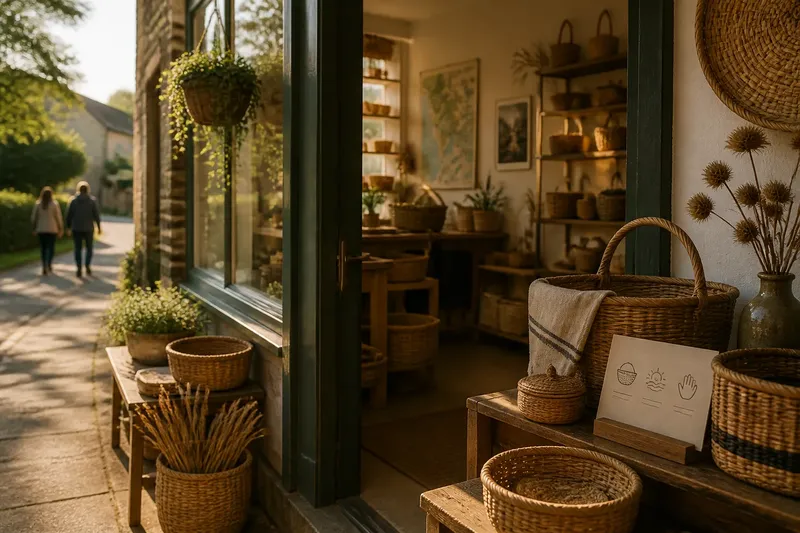
The most common mistake in moving from a travelling stall to a permanent shopfront is treating the new address as a larger pitch table. A fixed door changes what visitors expect: they may return, ask for help after buying, or bring someone else along. If the seller plans only for display and opening hours, that ongoing relationship can become a burden rather than an asset.
What does a permanent shopfront promise?
A stall makes its presence obvious for a short time. A painted sign, a familiar cloth and a busy path tell passers-by that the seller is here today. A shopfront makes a different promise: the business can be found again. That promise is useful, but it asks for consistent signals.
Those signals need not be elaborate. A legible sign, a clear view of what is sold, and an entrance that appears open do more than a window packed with every item. If opening times change with the season or local events, put the current hours somewhere a visitor can check before making a special journey. Keep the same information on the door and the business’s online listing.
Think about what the address invites people to do. A visitor who buys a hand-thrown cup may want to ask about care or see another glaze later. Someone who discovers a small food shop on a walk may expect it to be open on a return visit. Decide which follow-up the business can support, then make that route easy: a care card, a simple way to contact the shop, or a clear note about when new stock arrives.
A permanent presence also makes gaps more visible. A closed door without an explanation can feel like a broken promise, especially to someone who has travelled specifically to visit. If the shop must close unexpectedly, use a brief notice that says when it expects to reopen or where customers can find an update. Avoid promising a precise return time if circumstances may change.
How does a fixed address change the exchange?
At a stall, the encounter often begins with an object and ends when the visitor moves on. In a shop, the setting itself can invite a longer conversation. There may be room to compare pieces, ask how something is made, or explain what suits a particular use. That extra attention is part of the offer, even if no separate service is listed.
Choose a few useful answers to give consistently. For a local maker, these might cover how an item is made, how to care for it and whether a similar piece can be ordered. Keep the explanations plain and avoid implying that every item can be customised. A short card beside the display can answer routine questions without making the seller repeat them all day.
The shop also changes the balance between seller and visitor. A stallholder can read a crowd and adjust the pitch; a shopkeeper may spend long stretches waiting for the next person. Use the quiet to make the space easier to understand, not to press every visitor into conversation. A visible price, a sensible arrangement and a greeting that leaves room to browse let people set their own pace.
Say you sell woven baskets from a market stall and are considering a small shop near a walking route. You could keep one basket open with a finished example inside, label the sizes by their intended use, and place care notes nearby. A visitor who wants a quick look can understand the range without asking; someone choosing a gift has a natural reason to start a conversation. The change is observable in the interaction, not something to assume in advance: notice which questions recur and adjust the display around them.
What should travel with the seller?
Moving indoors does not mean discarding what made the stall recognisable. A particular way of greeting people, a well-used display tray or a story about the source of a material may still belong in the shop. Carry over the parts visitors respond to, rather than recreating the stall exactly. A shop has walls, a doorway and a different flow of attention.
Think of the entrance as a transition from the street. Visitors need to see quickly whether they are welcome and what kind of place they have entered. Keep the first display focused. Put fragile or easily handled goods where a browsing visitor can approach without reaching across a crowded counter, and leave a clear route through the room.
Give the space a local cue that is specific rather than decorative. It might be a map showing where a material is gathered, a note about the landscape that influences a design, or a small display connected to a nearby walking route. Explain the connection accurately and briefly. A token reference to local character can feel like a sales device if the product and place have no meaningful relationship.
Not every stall habit deserves a permanent home. A large banner, repeated announcements or an oversized display may work in an open market and feel intrusive in a small room. Keep what helps someone recognise, understand or choose the offer; leave the rest in storage. There is little value in reproducing a temporary setup just to prove that the shop came from one.
How can the shop become part of a visitor’s route?
A fixed shop is easier to revisit, but it does not automatically become a destination. People need a reason to include it in a walk, a day out or a local errand. The reason can be modest: a reliable place to find a particular craft, a useful stop near a trail, or a chance to see work that is not always carried to the market.
Make the visit straightforward. Describe the shop’s setting in practical terms, such as its nearest landmark or the side of a square it faces. If parking, steps or limited access may affect a visit, state that plainly and provide any useful alternative information. Do not rely on a photograph that makes the entrance easy to miss.
Build familiarity through repeated, manageable contact. A shop might put a small notice in a nearby café, share a seasonal opening update, or take part in a local event when it suits the business. Choose channels that visitors already use in that place. A stream of announcements is not the same as being known; one accurate update is more useful than several vague reminders.
Pay attention to how people arrive and what they ask after finding the door. Are they looking for a gift, a practical item, or a particular view of the area? Their questions can help refine the signs and the order of the display. Treat these conversations as clues, not as a demand to reshape the whole offer for every request.
How do you manage expectations after opening?
A permanent address makes consistency visible, so set a pattern the business can actually maintain. Publish opening times that fit the owner’s work, stock handling and local visitor flow. If the shop opens by appointment outside those hours, explain how to arrange one and how much notice is useful. Do not make access depend on a visitor guessing when someone might be available.
Keep a simple record of recurring questions, requested items and reasons people say they have come in. A notebook beside the till can be enough. Review it periodically and look for practical changes: a clearer sign, a more useful care card, or a small adjustment to where an item sits. The record should help resolve confusion, not turn every passing comment into a new commitment.
Decide how the shop will respond when something is unavailable. A visitor may have come for a particular piece seen at a stall or in a photograph. Explain whether the item is one-off, made to order or likely to return, and offer a contact route only if the business can follow it up. Clear limits protect trust better than a hopeful promise that cannot be kept.
Check any requirements tied to the premises, signage, access or trading arrangements with the relevant landlord, local authority or qualified professional where needed. Those details depend on the building and local rules; they should be settled before the shop makes public promises about access or opening.
What do sellers ask about a permanent shopfront?
Does a permanent shop need longer opening hours?
Not necessarily. A shorter, dependable schedule is easier for visitors to understand than broad hours that are frequently changed. Publish updates wherever people are likely to check before setting out.
Should the shop look like the original stall?
Keep recognisable features that help visitors connect the new premises with the seller. Adapt the display to the room instead of copying the stall’s full layout, signage and pace.
How can a small shop welcome visitors who only want to browse?
Make prices and product information easy to see, then greet people without following them through the room. Offer help when they ask or when they appear to be looking for something specific.
What if visitors expect a product to be available every time?
Explain which goods are made in small batches or vary with materials, and distinguish those from items usually kept in stock. A brief sign or direct answer can set expectations without turning every display into a warning.
Which parts of the stall should stay temporary?
Some aspects of a travelling business are valuable precisely because they change. A seasonal market, a one-off collaboration or a display at a local gathering can introduce the shop to people who might not pass its door. Keep those appearances selective. They can extend the shop’s reach without making visitors uncertain about where to find the core offer.
Do not try to attend every event simply because the stall once made that possible. Each outing asks for preparation, transport and attention away from the premises. Choose events that fit the products and the people who are likely to be there, then tell visitors how the temporary appearance relates to the permanent shop.
From travelling stall to permanent shopfront, the central change is not the move from open air to a roof. It is the shift from a brief encounter to a place people may expect to find again. Make that expectation concrete through a clear door, dependable information and honest answers about the work. Then leave room for the shop to become part of the local route at its own pace.